AMP - Agent Memory Protocol
An open protocol for AI agent memory interoperability.
Like MCP for tool calling - but for memory.


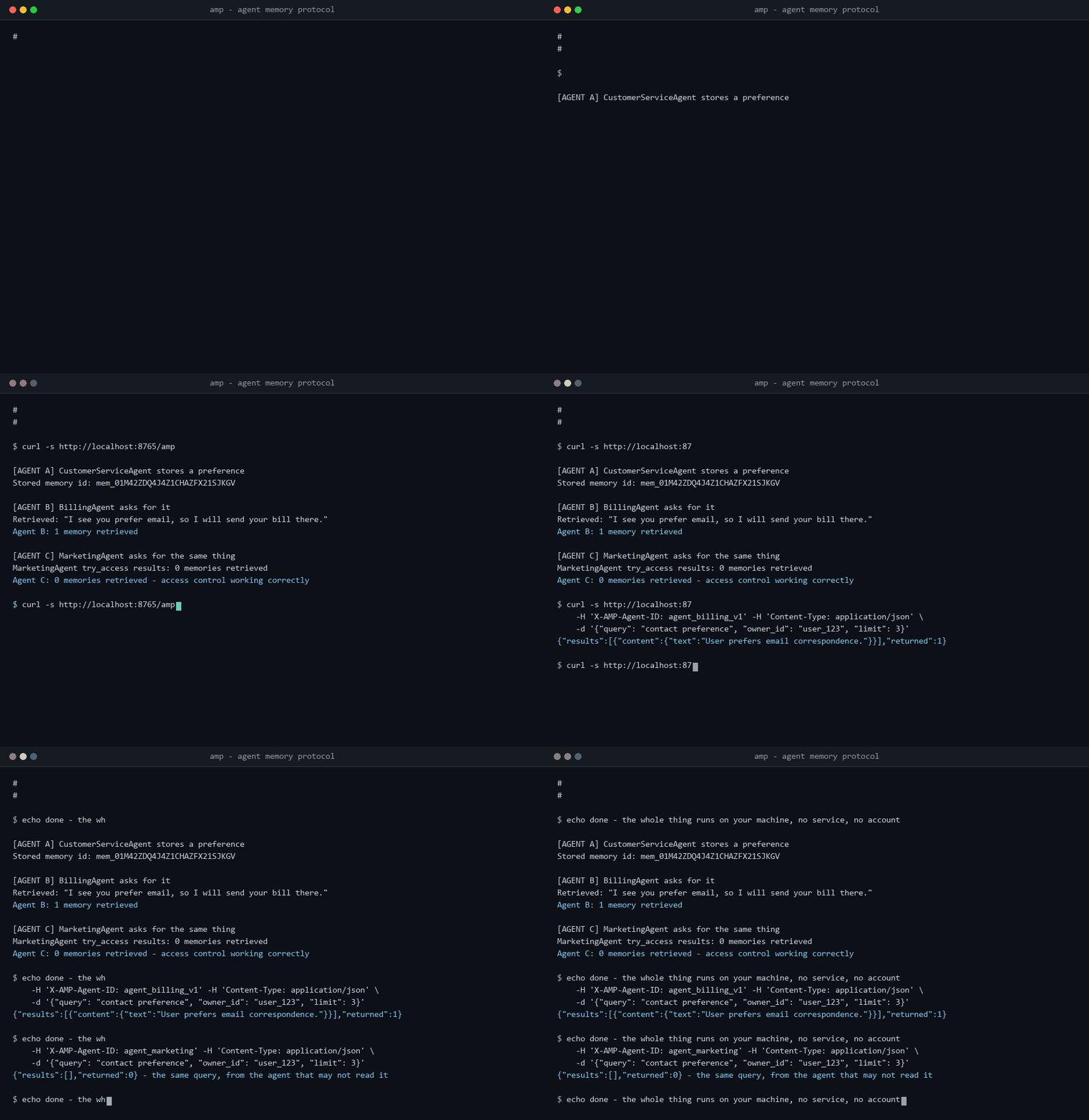
Real output from a real server: the multi-agent demo plus two curl calls. The
README has the commands
to reproduce it.
What is AMP?
AMP (Agent Memory Protocol) is an open, HTTP-native protocol for storing, retrieving, and sharing structured memory between AI agents across frameworks, vendors, and sessions.
In plain words: agents forget everything between sessions, and AMP is the shared notebook they can all use — with rules about which agent may read each note, and notes that fade when they stop being useful.
Agents read and write a shared memory tier using a standardized Memory Cell schema. AMP handles access control, semantic search, and decay-archival lifecycles out of the box.
Why it exists
Most agent frameworks lock memory to a single session or a single vendor. AMP defines the wire format and the lifecycle so memory can move between agents instead of dying with the process that created it.
| Capability | AMP | Raw HTTP + vector DB | Framework memory | MCP |
|---|---|---|---|---|
| Open standard schema | Yes | No | No | No |
| Lifecycle and decay | Yes | No | No | No |
| Per-cell access policy | Yes | No | No | No |
| Cross-agent sharing | Yes | No | No | No |
Start here
- Getting Started - a server running and your first memory in five minutes
- Protocol Specification - Memory Cells, state transitions, decay math
- API Reference - endpoints and payloads
- FAQ - common questions, and what the reference server does not yet do
Status
AMP is an early, honest reference implementation. The spec is v0.1.0, the SDKs are
published (pip install amp-client, npm install @glatinone/amp-client), and the decay
engine runs on a background schedule by
default - the interval configurable, or the scheduler disabled for deployments that prefer
to drive it themselves. The SDK's distribution status and the scheduler's defaults are
tracked openly rather than glossed over.